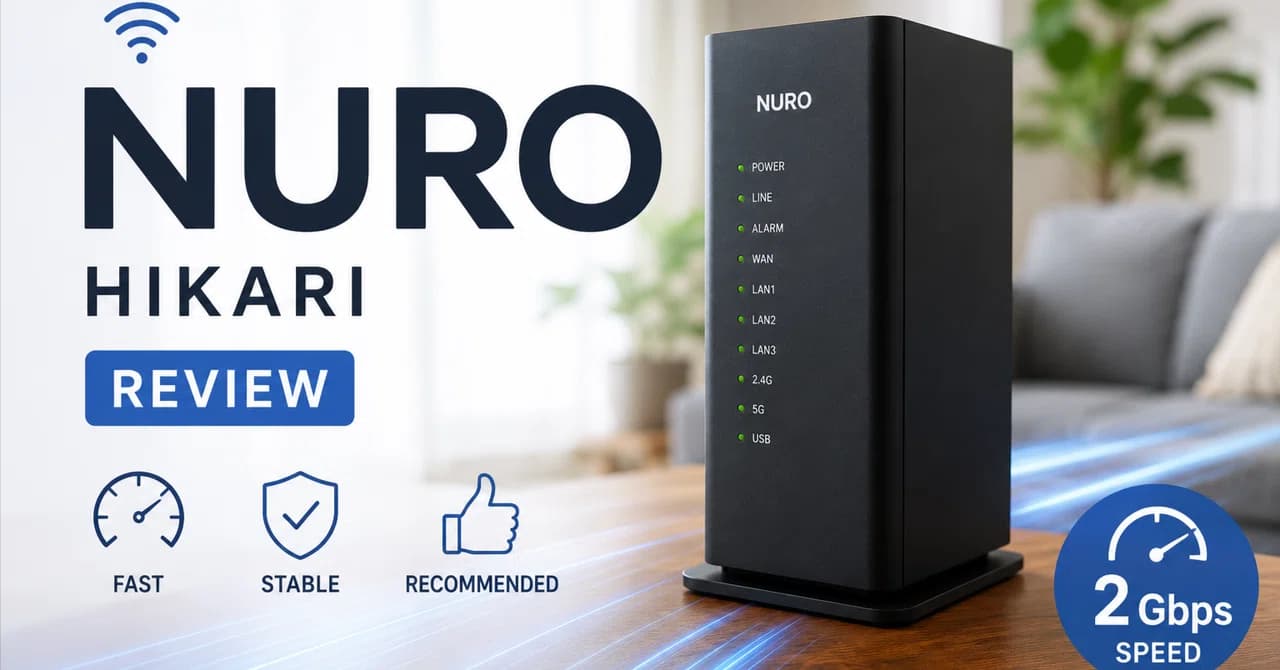
Experiencing NURO Hikari internet after 3 years
Before, because of my job I often had to move around, so I mainly used mobile internet instead of a fixed line. Part of it was because I thought I could move house anytime, and the other part was that if I wanted to install fiber internet, I’d usually need my landlord’s permission—so mobile internet felt more convenient.
Mobile internet services typically work by using a SIM card in a hotspot device. I’ve tried So-net, UQ Mobile, Rakuten, and even SoftBank Air before. A common point across these services was a monthly data cap—around 100GB.
Even when Rakuten advertised it as “unlimited,” in practice there was still a limit. Once you go over that threshold, the speed drops dramatically—basically only good enough for light tasks like checking email or looking up train information.
After I moved to a more stable place to live, I decided to switch to fiber internet, because so many people said the speed is much faster and the connection is far more stable.
I looked into plenty of plans from carriers like AU, docomo, SoftBank, NURO, GMO… and in the end, I chose NURO.
The reasons I picked NURO are:
They often have pretty solid promotions
It’s generally well-regarded for stability
You can get additional perks if you bundle with other services like NURO Mobile or NURO Gas
And especially— even the lowest-tier plan comes with 2Gbps, which is double the speed of many other providers, while the price is basically comparable
NURO also offers a 10Gbps plan. The difference is only about 500 yen per month. However, since my needs aren’t that high, I signed up for the basic 2Gbps plan for about 5,200 yen/month (before promotions), with a 3-year contract.
When I applied, the price was discounted to around 2,000 yen/month in the first year, and installation was free. After that, I also switched my mobile phone service to NURO Mobile for an additional 490 yen/month, so my monthly bill for everything went down quite a bit.
Installation took a little longer—about 3–4 weeks—and they needed to visit your home twice to complete everything. I figured that’s because the number of people using NURO has been increasing, so appointment schedules are usually pretty full.
After three years of use, I only remember the connection being temporarily cut off about 2–3 times. In those cases, simply restarting the modem was enough to get the connection back to normal.
Recently, since my contract was about to end, I called customer support to negotiate the rate. They ended up reducing it by another 2,000 yen/month for the next year, so I decided to keep using it. I’ll probably call again next year to see how it goes 😄
Summary
Personally, I’ve found NURO to be very stable and worth the money.
My day-to-day usage is mostly Netflix, YouTube, social media, and online work—and throughout my time using it, I haven’t really run into any major issues.
If you plan to live in Japan long-term and you’re looking for a stable internet connection, I’d definitely recommend NURO.
Right now, NURO also has some pretty good cashback campaigns. If you’re considering it, you can check the details and sign up by clicking on the banner below:
If you want to sign up or learn more about NURO Mobile, you can check the banner below. The lowest plan is currently about 990 yen/month for 5GB of data.

![[2026] Rakuten Shopping Marathon 09/05 – 16/05: Tips to grab deals and optimize points when shopping on Rakuten](/_next/image?url=%2Fuploads%2Farticles%2F1778861120750-l2qia9hubrs.png&w=3840&q=75)